Courses / DevOps Engineering
    Nexson IT Academy Courses

    DevOps Engineering Training

    Study CI/CD pipelines, Docker, Kubernetes, Jenkins, Ansible, Terraform, and cloud infrastructure automation through our DevOps course. Explore the syllabus, practical learning topics, and portfolio project briefs. Learn through guided practice with 100% Placement Assistance with 6 Months Placement Support.

    WhatsApp Enquiry
    Explore Curriculum
    DevOps Engineering training at Nexson IT Academy

    Course

    DevOps Engineering

    Training Mode

    Classroom & Online

    Level

    Beginner to Advanced

    Practical Learning

    Hands-on Training

    DevOps Engineering: course at a glance

    Study CI/CD pipelines, Docker, Kubernetes, Jenkins, Ansible, Terraform, and cloud infrastructure automation through our DevOps course. Explore the syllabus, practical learning topics, and portfolio project briefs.

    Learning focus
    Linux Administration & Shell Scripting, DevOps Culture & Version Control, CI/CD with Jenkins & GitHub Actions
    Starting level
    Beginner to Intermediate; confirm the right batch with admissions.
    Practical learning
    BYOD practical training and Virtual labs*.
    Included certification
    Course-specific Nexson IT Academy completion certificate.

    About DevOps Engineering training

    DevOps connects software delivery with reliable operations. Instead of treating deployment as a last-minute manual task, teams automate repeatable steps and make changes visible through version control, tests and monitoring. This course path follows a release from source code to a running service, covering Linux, Git, continuous integration, containers, infrastructure as code and operational feedback.

    A pipeline is useful only when it handles failure safely. Learn what should happen when a test fails, a container cannot start or an infrastructure change would replace a critical resource. Understand how credentials are supplied, how environments differ and how teams roll back a release. These decisions matter as much as writing a pipeline file.

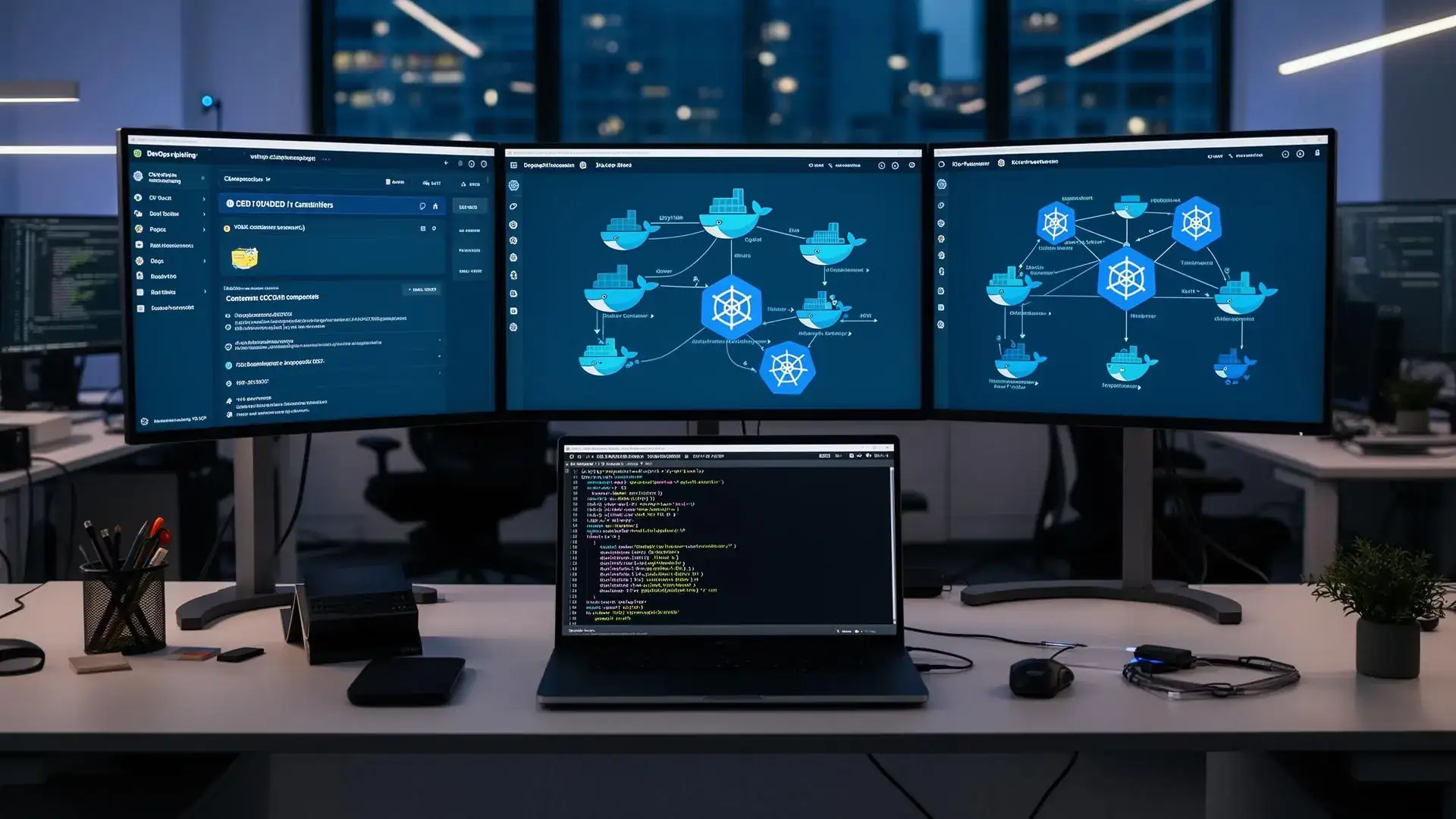
    The syllabus includes several tools, but the goal is to understand the workflow they support. Git records change history, Jenkins and GitHub Actions automate jobs, Docker packages applications, Kubernetes manages workloads, and Terraform describes infrastructure. Ansible, monitoring and logging help keep that environment understandable after deployment. Build small working systems before combining every tool into a larger capstone.
    Who should join and how to prepare

    Choose this learning path when its topics match your next step, whether that is building foundational knowledge, applying existing IT skills in a new area or organising practical work into a clearer portfolio. The course name alone does not establish readiness: compare your starting knowledge with the introductory modules and discuss gaps before admission.

    Practise Linux file navigation, permissions and processes. Learn basic Git commits and branches, and review networking concepts such as ports, DNS and HTTP. Bring a laptop for BYOD exercises and confirm lab requirements with the trainer before installing larger tools.

    Working professionals should consider how the syllabus relates to their current responsibilities. Students and career changers should allow time for revision and independent exercises. Ask for the current prerequisites, software setup and assessment expectations rather than assuming every batch starts at the same level.

    DevOps Engineering course syllabus

    The course outline below shows the existing learning topics. Confirm the latest batch syllabus with admissions. Work through the modules in sequence, revisit difficult concepts and use practical exercises to check understanding.

    Module 1: Linux Administration & Shell Scripting
    • Linux File System & Essential Commands
    • User Management & Permissions
    • Process Management & Networking Basics
    • Bash Shell Scripting for Automation

    For this module, explain the main concepts in your own words, document a small example and record questions for your trainer. Distinguish a successful demonstration from a result you can reproduce and troubleshoot independently.

    Module 2: DevOps Culture & Version Control
    • DevOps Culture, Agile & Scrum
    • Git Fundamentals & Branching Strategies
    • Pull Requests & Code Reviews
    • GitHub Workflows & Collaboration

    For this module, explain the main concepts in your own words, document a small example and record questions for your trainer. Distinguish a successful demonstration from a result you can reproduce and troubleshoot independently.

    Module 3: CI/CD with Jenkins & GitHub Actions
    • Jenkins Installation & Configuration
    • Pipeline as Code (Jenkinsfile)
    • Multi-branch Pipelines & Webhooks
    • GitHub Actions & Automated Testing

    For this module, explain the main concepts in your own words, document a small example and record questions for your trainer. Distinguish a successful demonstration from a result you can reproduce and troubleshoot independently.

    Module 4: Containerization with Docker
    • Docker Architecture & Images
    • Dockerfile Best Practices
    • Docker Compose & Networking
    • Container Security & Registry Management

    For this module, explain the main concepts in your own words, document a small example and record questions for your trainer. Distinguish a successful demonstration from a result you can reproduce and troubleshoot independently.

    Module 5: Kubernetes Orchestration
    • Kubernetes Architecture & Components
    • Pods, Services, Deployments & Ingress
    • ConfigMaps, Secrets & Volumes
    • Helm Charts & Package Management

    For this module, explain the main concepts in your own words, document a small example and record questions for your trainer. Distinguish a successful demonstration from a result you can reproduce and troubleshoot independently.

    Module 6: Infrastructure as Code with Terraform
    • Terraform Basics & HCL Language
    • AWS Infrastructure Provisioning
    • State Management & Modules
    • Multi-Cloud IaC Patterns

    For this module, explain the main concepts in your own words, document a small example and record questions for your trainer. Distinguish a successful demonstration from a result you can reproduce and troubleshoot independently.

    Module 7: Configuration Management with Ansible
    • Ansible Playbooks & Roles
    • Inventory Management
    • Templates & Variable Handling
    • Ansible Galaxy & Collections

    For this module, explain the main concepts in your own words, document a small example and record questions for your trainer. Distinguish a successful demonstration from a result you can reproduce and troubleshoot independently.

    Module 8: Monitoring, Logging & Cloud Deployment
    • Prometheus & Grafana Setup
    • Log Aggregation with ELK Stack
    • AWS/Azure Cloud Deployment
    • SRE Practices & Incident Management

    For this module, explain the main concepts in your own words, document a small example and record questions for your trainer. Distinguish a successful demonstration from a result you can reproduce and troubleshoot independently.

    Tools, technologies and practical learning

    • Docker
    • Kubernetes
    • Jenkins
    • Terraform
    • Ansible
    • AWS
    • Git
    • GitHub Actions
    • Prometheus
    • Grafana
    • Linux
    • Nginx
    • Helm
    • ELK Stack

    Learn what each tool does, what data it needs and how to interpret its output. A tool can produce a result without proving that the result is correct. Check settings, compare output with expected behaviour and keep enough notes to reproduce the exercise later.

    Virtual labs* are also provided alongside BYOD practical training. Lab setup and access conditions should be confirmed for the selected batch. Listed enterprise tools do not imply that a paid licence is included. Confirm any account, licence or usage costs before installing software or creating cloud resources.

    Use only authorised environments and non-sensitive practice data. Do not publish private credentials, personal records or client information in a portfolio. For security training, written permission and agreed scope must come before testing a system.

    Suggested DevOps Engineering portfolio project briefs

    These syllabus-based briefs show how to turn concepts into explainable work. They are suggested exercises, not a promise that every batch includes the same assigned projects. Confirm the environment, deliverables and assessment with your trainer.

    CI/CD pipeline with failure handling

    Build a pipeline that checks out source code, runs tests, creates an image and deploys to a practice environment. Add a deliberate test failure and show that deployment stops. Explain how credentials and build artefacts are handled.

    Containerised application

    Write a Dockerfile, configure runtime settings and deploy a small multi-service application. Add health checks and inspect logs when a service fails. Explain the difference between an image, a container and persistent application data.

    Infrastructure as code review

    Use Terraform to describe a practice infrastructure setup. Review the plan before applying changes, track state carefully and document resource cleanup. Avoid putting credentials in source control and confirm any cloud charges before running the exercise.

    Monitoring and recovery drill

    Create a dashboard and alert for a sample service. Introduce a controlled failure, investigate logs and metrics, and restore service. Record the timeline and propose one improvement that would make the next incident easier to handle.

    For each project, record the objective, architecture or workflow, implementation steps, checks and limitations. Add a short reflection explaining what failed and how you investigated it. An honest, reproducible project is more useful in an interview than a collection of screenshots without context.

    Classroom and live online learning

    Classroom study

    Discuss available classroom batches and the appropriate branch with admissions. Consider travel time, attendance and laptop setup before selecting a schedule. Bring questions from independent practice so that class time helps resolve specific difficulties.

    Live online study

    Confirm live online availability and timing for your course. A reliable connection, a suitable device and a quiet study space help you follow demonstrations and participate. Plan time to repeat exercises rather than relying only on watching a session.

    Compare delivery modes by the actual batch arrangements, trainer interaction, practical environment and assessment process. Neither mode removes the need to practise. Ask how questions and missed topics are handled before admission; do not assume unlimited access or a particular revision policy.

    Nexson IT Academy course certification

    The included certificate is the course-specific Nexson IT Academy DevOps Engineering completion certificate. Ask admissions about completion and assessment requirements. Keep your project work alongside the certificate so that you can explain what you have learned and demonstrate your practical approach.

    Vendor certifications are separate credentials with their own exam rules, eligibility and fees. Optional preparation tracks or add-ons may cost extra. This course does not issue official third-party vendor certificates or imply authorised vendor training-centre status. Check current requirements directly with the relevant certification provider before booking an exam.

    Full course fee and batch planning

    Request the current flat full-course fee from admissions. Before confirming your place, ask for the syllabus, training mode, batch start date, timetable and what the fee includes. Optional exams, enterprise licences and cloud account usage should not be treated as included unless explicitly confirmed.

    Batch availability changes, so this page does not invent a start date or seat count. Tell the advisor your current experience and preferred schedule. Review the details in writing and choose a batch you can attend consistently, with enough time between sessions to practise.

    From Enquiry to Certification

    Student Journey at Nexson IT Academy

    Your Journey from Enquiry to Training, Skill Development & Career Preparation

    At Nexson IT Academy, we guide students through every stage of their learning journey. From selecting the right course and attending expert-led training to gaining practical experience and preparing for job opportunities, we provide structured learning resources and career support to help students move forward with confidence.

    1Phase 1: Enquiry & Admission

    1. Step 1

      Course Enquiry

      Get in touch with Nexson IT Academy to learn about available courses and find a suitable training program.

    2. Step 2

      Course Counselling

      Understand course details, duration, training methodology, and fee structure. Get answers before you decide.

    3. Step 3

      Course Syllabus & Content Sharing

      Review the syllabus, topics covered, and course information to understand what you will learn.

    4. Step 4

      Attend a Demo Class

      Experience a demo session with the trainer, understand the teaching approach, and clarify your doubts.

    5. Step 5

      Fee Payment & Admission Confirmation

      Once satisfied with the course and demo, complete the fee payment and confirm your admission.

    2Phase 2: Student Onboarding & Portal Access

    1. Step 6

      Student Registration

      Complete the registration process and provide the required details to begin your learning journey.

    2. Step 7

      Batch Schedule & Training Details

      Receive information about your batch timings, training schedule, and course commencement.

    3. Step 8

      Course Portal Access

      Access recorded training videos and learning materials to revise concepts at your own pace.

    4. Step 9

      Task Portal Access

      View assignments, complete practice exercises, and manage regular training activities.

    3Phase 3: Training & Practical Skill Development

    1. Step 10

      Expert-Led Training

      Attend structured sessions and learn technical concepts through guided instruction from experienced trainers.

    2. Step 11

      Practical Lab Access

      Where applicable, access hands-on labs to practice relevant tools, technologies, and exercises.

    3. Step 12

      Assignments & Practical Exercises

      Apply your knowledge through assignments, practical exercises, and course-related projects.

    4. Step 13

      Exam Portal & Knowledge Assessment

      Practice mock tests and take assessments to identify knowledge gaps and improve preparation.

    4Phase 4: Career Preparation & Job Assistance

    1. Step 14

      Professional Resume Preparation

      Create a professional resume that highlights your technical skills, projects, training, and experience.

    2. Step 15

      LinkedIn Profile Optimization

      Improve your LinkedIn profile to showcase your skills and strengthen visibility to recruiters.

    3. Step 16

      Technical & HR Mock Interviews

      Practice technical and HR questions, improve communication, and build interview confidence.

    4. Step 17

      Job Portal Access & Latest Job Updates

      Access job portal resources and receive relevant job updates to support your job search.

    5Phase 5: Course Completion & Certification

    1. Step 18

      Course Completion Certificate

      Receive your course completion certificate after fulfilling the applicable completion and assessment requirements.

    Your learning journey is designed to help you build knowledge, develop practical skills, and prepare for career opportunities with confidence.

    Career paths and interview preparation

    The syllabus relates to roles such as DevOps Engineer, Cloud DevOps Engineer, Site Reliability Engineer, Platform Engineer, DevOps Architect. These are career directions to research, not guaranteed job titles after completing training. Senior positions require experience, and each employer defines its own responsibilities and selection criteria.

    Read current job descriptions and map their requirements to your projects. Prepare to explain a task, your decisions, the evidence you checked and how you handled a failure. Keep your resume accurate: describe practice work as practice work and avoid claiming professional client experience you do not have.

    100% Placement Assistance with 6 Months Placement Support is provided. Placement assistance does not guarantee employment, a specific package or selection by an employer. Discuss applicable career-support activities with admissions and continue building your skills through revision, project work and interview practice.

    DevOps Engineering frequently asked questions

    What does the DevOps Engineering syllabus cover?

    Study CI/CD pipelines, Docker, Kubernetes, Jenkins, Ansible, Terraform, and cloud infrastructure automation through our DevOps course. Explore the syllabus, practical learning topics, and portfolio project briefs. The published module list below explains the sequence of topics. Review both the syllabus and your starting knowledge with an advisor so that you choose a batch that matches your learning goals.

    How should I prepare before joining?

    Practise Linux file navigation, permissions and processes. Learn basic Git commits and branches, and review networking concepts such as ports, DNS and HTTP. Bring a laptop for BYOD exercises and confirm lab requirements with the trainer before installing larger tools.

    Can I study in a classroom or live online?

    Discuss classroom and live online options with admissions before enrolling. Confirm the trainer, batch schedule and delivery mode for your chosen course. Live online study still requires participation, practical work and a suitable internet connection; it is not simply a collection of videos.

    Are Virtual labs* and BYOD practice available?

    Virtual labs* are also provided alongside BYOD practical training. Confirm the environment, setup and access conditions for your batch with the trainer. Do not assume lifetime access, round-the-clock availability or included enterprise software licences unless these are explicitly confirmed.

    Which course certificate is included?

    The included course certificate is the Nexson IT Academy DevOps Engineering completion certificate. Third-party vendor certifications are separate credentials. Optional exam preparation or add-ons may involve additional cost, and vendor exams must be booked under the relevant vendor’s requirements.

    What is the full course fee?

    Contact admissions for the current flat full-course fee and accepted payment methods. Request a written explanation of what the fee includes before enrolling. Optional vendor exams, paid tools or cloud usage should not be assumed to be included unless explicitly confirmed.

    What placement support is provided?

    Nexson IT Academy provides 100% Placement Assistance with 6 Months Placement Support. Discuss the applicable career-preparation activities with admissions. Placement assistance is not a job guarantee: selection depends on your skills, interview performance, employer requirements and available opportunities.

    Are the project briefs guaranteed batch deliverables?

    The project briefs on this page are suggested portfolio exercises based on the syllabus. Confirm the assigned projects, assessment method and available practice environment with your trainer. A useful portfolio records your decisions, evidence and limitations rather than presenting an unverified claim of production experience.

    Can I join while working or studying?

    Ask admissions about current schedules before choosing a batch. Consider both class attendance and independent practice time. A suitable timetable should leave room to revise concepts, complete assignments and ask questions, rather than requiring you to rush through unfamiliar material.

    How can I compare this course with another learning path?

    Compare starting knowledge, syllabus depth, practical exercises and your intended role. A broader program may cover more domains, while a focused course may spend more time on one workflow. Ask for the current syllabus and discuss your background before deciding based only on a course name.

    Does course completion guarantee a salary or job title?

    No. Course completion does not guarantee a particular salary, employer or role. Use the career examples to research relevant skills, then review current job descriptions. Experience requirements differ, and senior or leadership titles generally require a professional track record beyond classroom training.

    How do I get the latest batch and syllabus details?

    Use the enquiry button or WhatsApp link to contact admissions. Mention the course, your current knowledge and your preferred learning mode. Ask for the latest syllabus, full fee and available batch details before confirming admission.

    Call Now